English
 Español
 Português
 русский
 Français
 日本語
 العربية
 Indonesia
 Latine
 Deutsch
 tiếng Việt
 Italiano
 Nederlands
 ภาษาไทย
 Polski
 한국어
 Svenska
 magyar
 Malay
 বাংলা ভাষার


Large-scale dredging projects require more than powerful equipment. Contractors must consider excavation depth, sediment characteristics, water conditions, pipeline distance, production targets, and operating costs before selecting a dredging solution. A Depth 20m Cutter Suction Dredger is designed for projects that require excavation capabilities reaching approximately 20 meters below the water surface, subject to its actual configuration and operating conditions.
From port development and river maintenance to reservoir management and land reclamation, this type of dredger can provide a practical solution for moving substantial quantities of underwater material. Understanding its working principle and performance factors helps project owners make better equipment decisions.
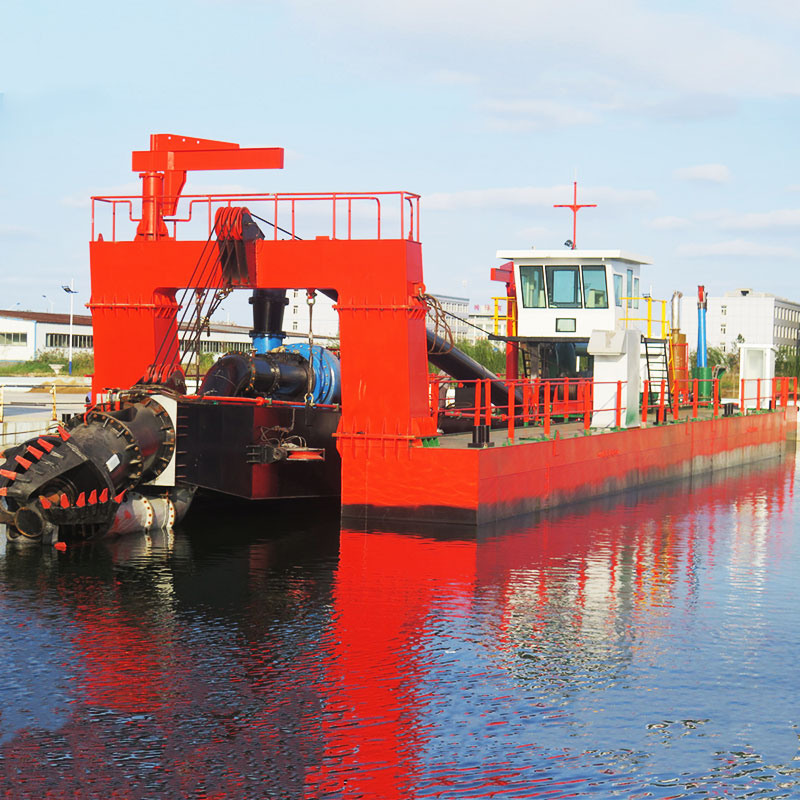
1. Understanding a Depth 20m Cutter Suction Dredger
A cutter suction dredger is a hydraulic dredging vessel equipped with a rotating cutter head, suction pipeline, dredge pump, and discharge system. It excavates underwater soil mechanically and transports the loosened material as a mixture of sediment and water through a pipeline.
The term Depth 20m generally describes a dredger designed to reach a maximum dredging depth of approximately 20 meters under specified operating conditions. It does not automatically mean that every project can achieve this depth with the same production rate. Actual performance depends on boom geometry, ladder length, cutter configuration, water level, sediment properties, and the dredger's technical design.
Compared with equipment that relies only on suction, a cutter suction dredger uses mechanical cutting to loosen compacted materials before pumping. This makes it suitable for a wider range of sediment conditions, although very hard rock or highly consolidated formations may require specialized equipment and additional preparation.
Maximum dredging depth, effective production depth, and recommended continuous operating depth are not necessarily identical. Buyers should request technical drawings and confirm the operating envelope with the manufacturer.
2. How the Cutter Suction System Works
The dredging process combines mechanical excavation and hydraulic transportation. These systems must operate in coordination to maintain stable production and prevent unnecessary equipment stress.
Step 1: Positioning the Dredger
The dredger is positioned above the target excavation area and secured using spuds, anchors, or another positioning arrangement. The selected method depends on water depth, current, seabed conditions, and the vessel's design.
Step 2: Lowering the Cutter Head
The cutter ladder is lowered until the cutter head reaches the required working level. The rotating cutter loosens underwater sediment and creates a mixture that can be drawn into the suction inlet.
Step 3: Suction and Pumping
The dredge pump generates the flow needed to transport the sediment-water mixture through the suction pipeline. Pump selection must account for required flow, discharge pressure, sediment density, and pipeline resistance.
Step 4: Discharging the Material
The mixture is transported through a floating or shore-based pipeline to a designated discharge area, settling basin, reclamation zone, or other approved destination. Pipeline routing and discharge arrangements should be planned before dredging begins.
Step 5: Moving Across the Excavation Area
After completing a cutting pass, the dredger shifts its working position and repeats the process. Controlled movement helps maintain the target excavation profile and avoid unnecessary over-dredging.
3. Major Equipment Components
Understanding the main components helps buyers assess whether a proposed dredger is appropriate for their project. A reliable system requires more than a powerful pump; the cutter, ladder, hull, hydraulic equipment, and control system must work together.
| Component | Main Function | What Buyers Should Check |
|---|---|---|
| Cutter head | Breaks up underwater sediment before suction. | Cutting diameter, material, tooth arrangement, and suitability for soil conditions. |
| Dredge pump | Moves the sediment-water mixture through the pipeline. | Flow rate, head, wear resistance, and pump curve. |
| Dredging ladder | Supports the cutter head and suction arrangement. | Length, structural strength, and working depth. |
| Spud system | Helps secure and reposition the dredger. | Spud length, movement system, and holding capability. |
| Power system | Supplies energy for pumping, cutting, and auxiliary equipment. | Engine rating, fuel consumption, and maintenance requirements. |
| Discharge pipeline | Transfers dredged material to the destination. | Diameter, pressure rating, length, and connection method. |
| Control system | Coordinates operating functions and monitoring. | Visibility, instrumentation, alarms, and ease of operation. |
For long-term projects, component accessibility and replacement-part availability are also important. A design that simplifies inspection and routine servicing can help reduce avoidable downtime.
4. Understanding the 20-Meter Dredging Depth
A 20-meter dredging capability is an important specification for projects involving deep channels, port basins, reservoirs, and other underwater excavation areas. However, buyers should understand exactly how the manufacturer defines this figure.
Some specifications describe the maximum vertical distance from the water surface to the cutter head, while others may use a different reference point. Water-level changes, ladder angle, vessel movement, and the cutter's operating position can all affect the achievable excavation depth.
Before purchasing, confirm the following details:
- Whether the stated depth is measured from the water surface or another reference level.
- The minimum and maximum operating water depths.
- The ladder angle and cutter positioning range.
- Whether the dredger can maintain the required excavation depth under expected current and wave conditions.
- The relationship between working depth, pump performance, and achievable production.
- Any restrictions associated with sediment type and pipeline configuration.
It is also important to distinguish between dredging depth and discharge distance. A dredger capable of reaching 20 meters below the water surface does not necessarily have the same capability to pump material over a long distance on land. Both requirements should be evaluated separately.
5. Typical Applications in the Americas
North and South America contain diverse waterways, coastlines, ports, rivers, and industrial development zones. A 20-meter cutter suction dredger may support projects where deep excavation and hydraulic material transportation are required.
Port and Harbor Development
Ports need suitable water depths to accommodate vessels and maintain navigation channels. Dredging may be required during new construction, berth development, and periodic maintenance. In North America, projects may involve commercial ports, industrial terminals, and coastal facilities. South American ports may also require channel improvement and sediment removal to support regional trade.
River Channel Maintenance
Rivers transport sediment that can accumulate in navigation channels, turning areas, and access routes. Dredging can help restore planned channel dimensions when supported by appropriate environmental permits and engineering assessments.
Land Reclamation
Hydraulic dredging can move suitable sediment to designated reclamation areas. Projects may include industrial land development, port expansion, and infrastructure preparation. Material suitability, settlement behavior, and environmental controls must be considered before reclamation begins.
Reservoir and Waterway Management
Reservoirs and inland waterways may experience sediment accumulation over time. Removing selected deposits can help restore storage capacity or improve waterway functions, depending on the project's engineering objectives.
Mining and Sand Recovery
In suitable geological and regulatory conditions, cutter suction dredgers can be used in sand and aggregate recovery operations. The cutter design, pump configuration, material characteristics, and processing arrangement should be evaluated together.
| Project Type | Typical Dredging Objective | Key Planning Factor |
|---|---|---|
| Port development | Achieve planned navigation and berth depths. | Excavation accuracy and sediment disposal. |
| River maintenance | Remove accumulated sediment. | Current conditions and channel geometry. |
| Land reclamation | Transport suitable material to development areas. | Pipeline distance and material quality. |
| Reservoir management | Remove selected sediment deposits. | Water-level variation and environmental controls. |
| Sand recovery | Excavate and transport recoverable material. | Grain size, wear, and processing requirements. |
6. Handling Different Sediment Conditions
Not all dredging sites contain the same material. Sediment may include soft silt, fine sand, clay, compacted deposits, or mixtures containing gravel and other particles. The cutter head and pump system should be selected according to the expected material.
- Soft silt: Often requires careful control of cutting speed and slurry concentration to avoid excessive dilution.
- Fine sand: Can generally be transported hydraulically when pump and pipeline conditions are correctly matched.
- Clay: May require sufficient mechanical cutting force to loosen cohesive material.
- Gravel mixtures: Require attention to particle size, pump passage dimensions, and wear protection.
- Highly consolidated material: May require specialized cutting arrangements or preliminary treatment.
Soil investigation is essential. A dredger selected only according to maximum depth or nominal pump power may perform poorly if the actual sediment conditions are not understood.
7. Factors Affecting Dredging Efficiency
Actual production is influenced by the complete dredging system rather than one specification. A high-capacity pump cannot compensate for an unsuitable cutter, excessive pipeline resistance, or unstable positioning.
Material Characteristics
Density, particle size, cohesion, and the presence of abrasive particles affect cutting resistance, slurry concentration, and equipment wear.
Pump and Pipeline Matching
The pump must deliver suitable flow and pressure for the total system resistance. Pipeline diameter, length, bends, elevation changes, and slurry properties all influence transportation performance.
Operating Conditions
Water currents, waves, changing water levels, and limited working space can affect positioning and production continuity.
Operator Experience
Experienced operators can coordinate cutter movement, ladder depth, pump operation, and vessel positioning more effectively. Proper training also supports equipment protection.
Ask the supplier for expected production under clearly defined soil, depth, and pipeline conditions. A production figure without these assumptions may not accurately represent performance at the project site.
8. How to Evaluate Equipment Specifications
When comparing a Depth 20m Cutter Suction Dredger, buyers should evaluate the complete technical configuration instead of relying on a single headline specification.
- Confirm the working depth: Verify the measurement reference and operating limitations.
- Review pump performance: Request flow, head, power, and pump curve information.
- Check cutter suitability: Match the cutter configuration to the site's sediment characteristics.
- Evaluate pipeline requirements: Confirm the planned discharge route and total transportation distance.
- Assess power consumption: Compare expected fuel or energy consumption under realistic working conditions.
- Review maintenance support: Ask about wear parts, spare parts, service documentation, and technical assistance.
- Confirm transportation arrangements: Check vessel dimensions, disassembly requirements, lifting points, and shipping plans.
For projects in North and South America, regional logistics should be included early in the procurement process. Port access, inland transportation, customs procedures, local service resources, and spare-part delivery times can influence the overall project schedule.
9. Operational and Maintenance Considerations
Routine maintenance helps protect the dredger's operating reliability and reduce unexpected interruptions. A maintenance plan should be based on the manufacturer's instructions, operating hours, material abrasiveness, and site conditions.
Before Operation
- Inspect the cutter head, teeth, fasteners, and ladder structure.
- Check pump condition, seals, bearings, and lubrication.
- Inspect pipeline connections and supporting equipment.
- Confirm that positioning systems and emergency controls work correctly.
- Review site conditions and the planned discharge arrangement.
During Operation
- Monitor pump pressure, flow conditions, engine temperature, and vibration.
- Watch for abnormal noise, leakage, or changes in slurry flow.
- Adjust cutter movement according to the sediment conditions.
- Avoid operating outside the equipment's specified limits.
After Operation
- Inspect wear components and record any damage.
- Clean relevant equipment according to operating procedures.
- Review fuel use, operating hours, and production records.
- Schedule replacement of worn components before failure occurs.
Environmental management is equally important. Dredging contractors should follow applicable permits, sediment disposal requirements, water-quality controls, and local regulations. Requirements differ between countries, states, provinces, and project locations.
10. Frequently Asked Questions
Q1: What does a Depth 20m Cutter Suction Dredger mean?
It generally refers to a cutter suction dredger designed to reach a maximum dredging depth of approximately 20 meters under specified conditions. Buyers should confirm the manufacturer's depth reference and operating limits.
Q2: Can a 20-meter cutter suction dredger handle clay?
Yes, it may handle suitable clay deposits when the cutter head, pump, and power configuration are matched to the material's cohesion and density. Very hard or highly consolidated formations may require specialized equipment.
Q3: How far can the dredger transport sediment?
Discharge distance depends on pump head, pipeline diameter, slurry characteristics, elevation changes, and system resistance. Maximum dredging depth alone cannot determine the discharge distance.
Q4: Is this equipment suitable for river dredging in South America?
It can be suitable for certain river projects, depending on water depth, current, sediment characteristics, access conditions, environmental requirements, and the planned discharge location.
Q5: Can it be used for port construction in North America?
It may be suitable for selected port excavation and maintenance projects. Contractors should verify project specifications, site conditions, permitting requirements, and equipment compliance before deployment.
Q6: What information should buyers provide when requesting a quotation?
Useful information includes required dredging depth, sediment type, project location, expected production, discharge distance, water conditions, and any transportation or delivery requirements.
Q7: How can equipment downtime be reduced?
Regular inspection, correct operating procedures, suitable wear parts, operator training, and timely maintenance can help reduce avoidable downtime.
Conclusion: Selecting a Dredger for Long-Term Project Performance
A Depth 20m Cutter Suction Dredger can be an effective solution for demanding underwater excavation projects when its design is properly matched to the working environment. Its performance depends on the coordination of the cutter head, dredge pump, ladder, pipeline, power system, and positioning equipment.
For contractors in North and South America, careful evaluation of sediment conditions, water depth, discharge distance, transportation, and maintenance support is essential. Rather than focusing on maximum depth alone, buyers should compare complete technical configurations and request project-specific performance information.
Looking for a Suitable Cutter Suction Dredger?
Royang Dredger Company Limited provides dredging equipment solutions for different project requirements. Whether your project involves river maintenance, port development, land reclamation, or sand recovery, selecting the right configuration is an important step toward reliable operation.
Share your project depth, sediment conditions, expected production, and discharge distance with our team. We can discuss your technical requirements and help identify a suitable dredging solution.
Contact us today to discuss your Depth 20m Cutter Suction Dredger requirements and request further product information.